
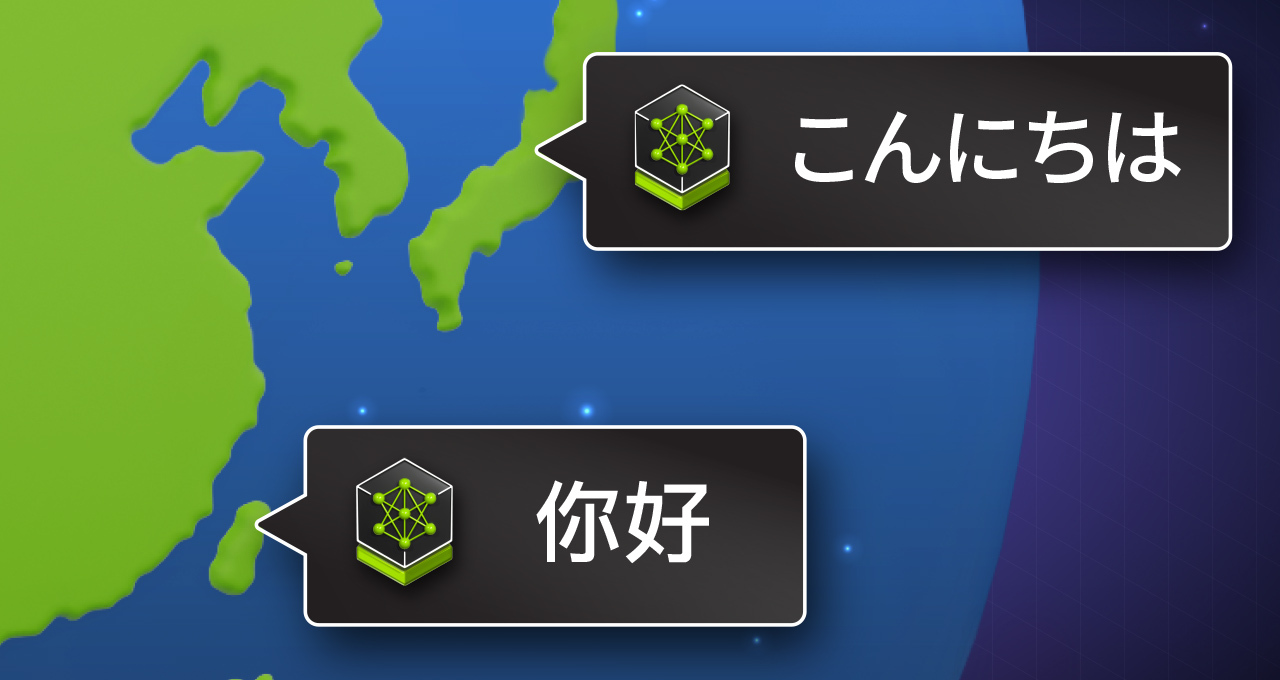
Four new microservices help accelerate deployment of sovereign AI applications that offer advanced cultural and language fluency.
Nations across the globe are resolutely pursuing sovereign AI, harnessing their own infrastructure and data to guarantee alignment with local values, laws, and interests.
In a show of support for these endeavors, NVIDIA has unveiled four new NVIDIA NIM microservices designed to assist developers in constructing and deploying high-performing generative AI applications. These microservices cater to popular community models customized for regional requirements, enhancing user interactions by improving comprehension of local languages and cultural nuances.
ABI Research projects a substantial surge in generative AI software revenue in the Asia-Pacific region, from $5 billion in the present year to an estimated $48 billion by 2030. Among NVIDIA’s new microservices are regional language models such as Llama-3-Swallow-70B and Llama-3-Taiwan-70B, both trained on Japanese and Mandarin data respectively, thereby offering a deeper understanding of local legal frameworks, regulations, and traditions.
These NIM microservices, in the form of advanced models, deliver superior performance for language comprehension, legal tasks, and translation when compared to base models like Llama 3. Notably, countries like Singapore, the UAE, South Korea, Sweden, France, Italy, and India are making substantial investments in sovereign AI infrastructure.
NVIDIA AI Enterprise’s NIM microservices are fine-tuned for inference with the NVIDIA TensorRT-LLM open-source library, resulting in up to 5x higher throughput and decreased latency. These microservices empower organizations to host native LLMs in their environments, thereby facilitating the advancement of sophisticated AI applications.
Institutions such as the Tokyo Institute of Technology and Chang Gung Memorial Hospital are leveraging these models to enhance AI tools in healthcare and other sectors. Furthermore, NVIDIA’s AI Foundry platform offers robust support to developers in crafting custom models, ensuring that AI applications are culturally and linguistically appropriate for diverse global markets.

Leave a Reply